The Reinvention Playbook: Five Moments That Rewrote the Rules of Entertainment (And What They Teach Us About Our Own Next Move)
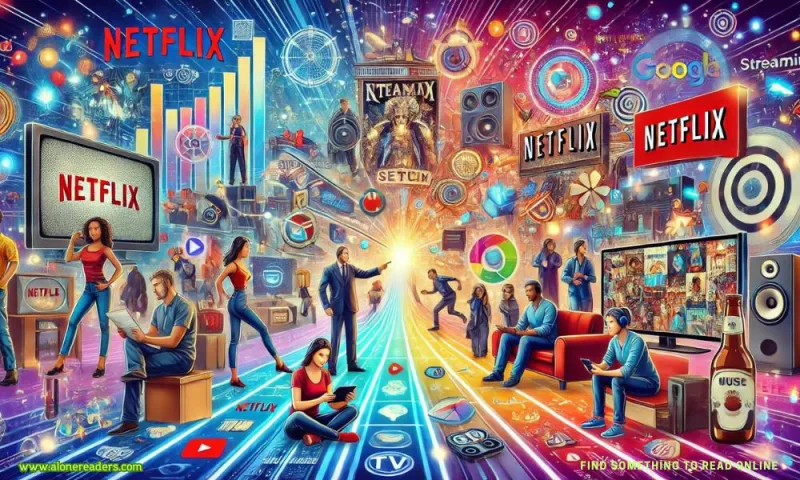
Photo: entertainment industry evolution streaming media technology creative professionals meeting, via www.alonereaders.com
The entertainment business has a way of making people feel like the ground is always shifting. And honestly? It is. But not randomly. The shifts follow patterns. The reinventions leave clues. And if you know what to look for, you can stop reacting to change and start positioning yourself ahead of it.
I've spent a lot of time studying the moments when entertainment didn't just evolve — it transformed. Not gradual drift, but actual inflection points where the old playbook stopped working and someone had the courage (or the desperation) to write a new one.
Here are five of those moments, what made each one work, and what they mean for anyone building a creative career right now.
1. Netflix Goes Original — And the Prestige TV Wars Begin (2013)
When Netflix dropped all 13 episodes of House of Cards on February 1, 2013, it wasn't just launching a show. It was detonating a bomb under the entire broadcast television model.
Suddenly, binge-watching wasn't a guilty habit — it was the intended experience. The weekly episode release schedule, which had structured American TV consumption for decades, started looking like an artifact. And the idea that "prestige" drama lived exclusively on HBO or AMC? Gone.
What made the pivot work wasn't just the content. It was the data. Netflix knew, from years of viewing behavior, that subscribers who liked Kevin Spacey also liked David Fincher. They didn't greenlight House of Cards on a gut feeling — they greenlit it on a thesis backed by numbers.
The lesson for creators: Data and intuition aren't opposites. The smartest move is building systems that inform your instincts rather than replace them. Know your audience deeply enough that your creative risks are educated risks.
2. Podcasting Grows Up — From Hobbyist Audio to Cultural Institution (2014–2018)
For most of the 2000s, podcasting was a niche thing. Enthusiasts, tech nerds, radio refugees. Then Serial happened in 2014 and pulled millions of people into a true-crime narrative told entirely through audio. By 2018, My Favorite Murder, Conan O'Brien Needs a Friend, and Armchair Expert were pulling numbers that would make cable executives nervous.
The reinvention here wasn't technological — the RSS feed hadn't changed. What changed was credibility. Podcasting stopped being seen as lesser media and started being treated as a legitimate storytelling platform. Major talent agencies started signing podcasters. Spotify dropped $100 million on Joe Rogan. Suddenly everyone with a microphone and a story to tell had a real shot at building an audience.
The lesson for creators: Don't wait for a medium to be validated before you commit to it. The people who built podcast audiences before Serial were already positioned to win when the mainstream caught up. Early presence in an emerging format is one of the most underrated career advantages in entertainment.
3. YouTube Proves That Ordinary People Can Be Stars (2008–2012)
Fred. Smosh. Jenna Mourey (Jenna Marbles). The early YouTube stars weren't polished. They weren't backed by studios or management teams. They were teenagers and twenty-somethings filming themselves in bedrooms, talking directly to cameras, being aggressively, almost defiantly real.
And audiences absolutely loved it.
This was the moment the entertainment industry had to reckon with the fact that relatability was a form of star power. The traditional model — manufacture a star, control the image, distribute through gatekeepers — started showing cracks. Parasocial connection, the sense that you actually know the person you're watching, turned out to be more compelling to a generation of viewers than the glossy distance of traditional celebrity.
The lesson for creators: Authenticity isn't a buzzword. It's a competitive advantage. In a landscape saturated with content, the creators who build genuine human connection with their audiences are the ones who survive platform shifts, algorithm changes, and career setbacks. You can't fake that long-term.
4. The Marvel Cinematic Universe Invents the Franchise as a Universe (2008–2019)
Iron Man in 2008 wasn't just a superhero movie. It was the first brick in an interconnected storytelling architecture that would eventually span 23 films, multiple TV series, and a cultural footprint that redefined what a franchise could be.
Before the MCU, sequels were sequels. After the MCU, studios started thinking in terms of universes — long-form, multi-platform narrative ecosystems where each piece of content added value to every other piece. The audience wasn't just watching movies. They were participating in an ongoing story that rewarded investment and attention.
This model has been attempted (and mostly failed) by every major studio since. The reason Marvel succeeded where others stumbled is that they started with character, not IP management. Every expansion of the universe was rooted in whether audiences genuinely cared about the people in it.
The lesson for creators: Think in ecosystems, not episodes. Whether you're building a YouTube channel, a podcast network, or a production company, the question isn't just "what's the next thing I'm making?" It's "how does this connect to everything else I'm building, and how does each piece make the whole more valuable?"
5. TikTok Rewires Discovery — And Every Creator Has to Start Over (2020–Present)
Every previous platform shift rewarded people who already had audiences. TikTok changed that. Its For You Page algorithm is genuinely indifferent to follower count. A creator with 200 followers can go viral overnight. A creator with 2 million can post something that lands with nobody.
This was disorienting for established creators who had built their entire strategy around accumulated audience. But for newer voices? It was an open door.
The pivot point here is still happening. We're in the middle of it. And the creators navigating it best are the ones who've stopped trying to transfer their old playbook onto a new platform and started asking what this specific platform rewards — then building for that honestly, not cynically.
The lesson for creators: Every platform reset is a redistribution of attention. When the rules change, the people who move fastest — with genuine creative intent — capture ground that's expensive to take back once others settle in.
The Common Thread
Look across all five of these pivots and one thing stands out: none of them were about having the most resources. They were about having the clearest read on where audience attention was moving — and the willingness to go there before it felt safe.
That's the reinvention playbook in one sentence. See the shift early. Move with intention. Build something real.
Your next pivot point is already forming somewhere on the horizon. The question is whether you're watching for it.